May 5, 2026

7:00 p.m. ET

Computers to the Moon

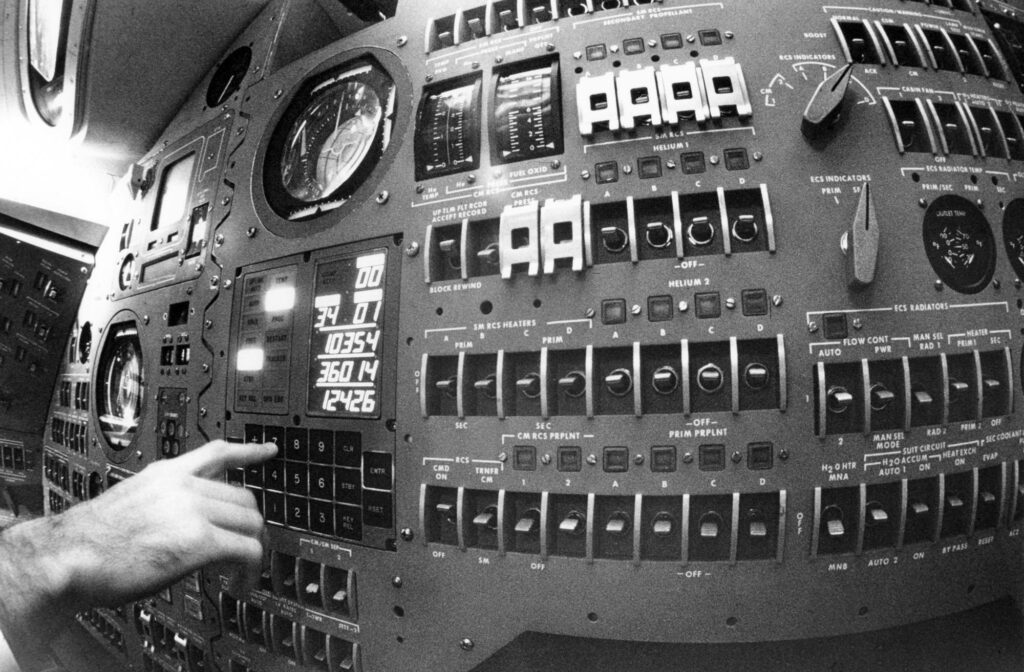
How did the United States manage to get humans to the moon in the 1960s at a time when PCs didn’t exist and computers were the size of a small warehouse?

Computers to the Moon tells the story of the monumental and little-known effort to create a computer capable of landing a spacecraft on the moon.

From our highly-technical society today, it’s easy to look back half a century and wonder how anyone back then could have built a spacecraft computer capable of flying to the moon a quarter of a million miles away and landing with pinpoint accuracy. Before the Apollo program, such a computer didn’t exist. But the history of the pioneering Apollo Guidance Computer demonstrates that ingenious, motivated, dedicated engineers and software developers, even half a century ago, could accomplish amazing things. In Computers to the Moon, you’ll meet some of the pioneering men and women who pushed the boundaries of computing, learn what they created, how it worked, how the astronauts used it, and get a glimpse of how the Apollo Guidance Computer choreographed a real moon landing 50 years ago.

Mark Shulman, Member, Central Florida Computer Society
Mark Schulman has spent his career as a computer instructor, software designer, and small business owner. He has taught a wide range of programming courses for major corporations and worked on large software development projects. He is currently the IT manager for a group of family practice physicians. His major geek interest these days is the computer technology that brought about the moon landings in the 1960s. He lives near Orlando, Florida.

In person at: Scarsdale Public Library (when applicable), 54 Olmsted Road, Scarsdale, NY 10583 (Google Maps). And always online on Zoom.

Guests welcome: guests, please register here.


Return to home page.